High-mix
Deep option and variant depth modelled as rules
High-mix and engineered-to-order configuration with engineering rules modelled on a knowledge graph, guided and expert quoting across direct, distributor and self-service channels, and a full aftermarket engine for parts, service and rebuild. One platform, one knowledge graph.
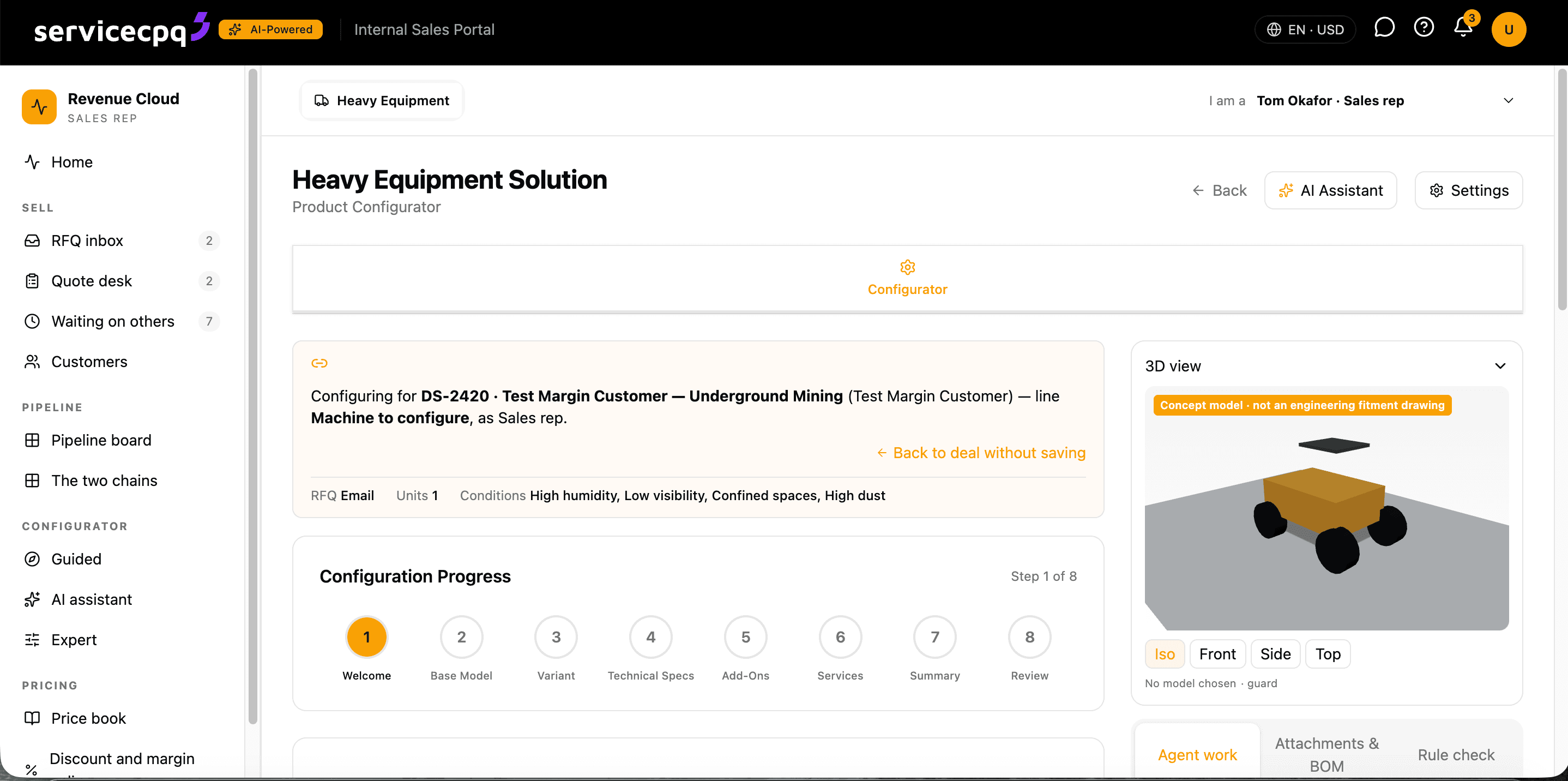
Deep option and variant depth modelled as rules
Engineered-to-order scopes carried inside the quote
A path for routine builds and for the hard ones
First quote to rebuild on one knowledge graph
Industrial OEMs sell deep, configurable and engineered-to-order machinery — where a flat option list lets invalid builds through and routes everything to the same overloaded engineers.
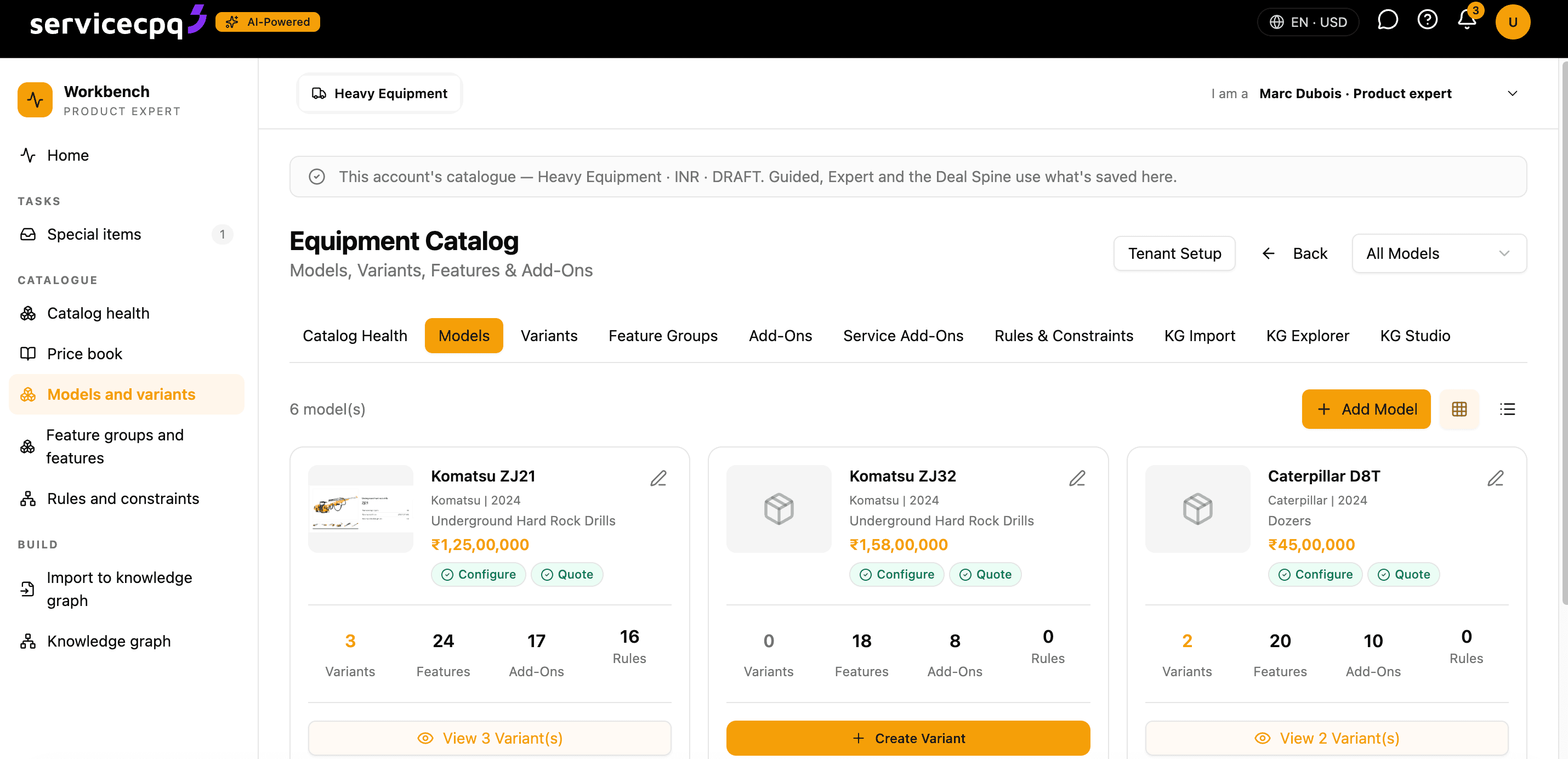
Industrial machinery carries deep option trees, long dependency chains and frequent engineered specials. Generic CPQ models a flat list — it cannot reason about what each option consumes, requires or excludes, so invalid builds slip through.
When nothing validates the request up front, standard, configurable and genuinely engineered work all queue behind the same engineers — so quote cycles stretch to weeks and sales waits on the people the shop needs.
Without a model that captures and reuses engineered configurations, a near-identical special is rebuilt from scratch on every enquiry — and the ones that should have become catalogue products are never named.
Spares, service and rebuild for machines on several continents are quoted off records that no longer match the as-built unit — missing recurring revenue.
A single form for every build slows the routine ones and under-serves the engineered ones, with no distinction between what the engine can resolve and what truly needs an engineer.
Without guardrails applied at quote time, discounting on high-mix builds erodes margin before anyone reviews it.
Give your team one consistent workflow — from a guided routine build to the engineered special and the aftermarket the installed base needs.
Options, variants and dependencies modelled as rules, so feasibility is derived before a product is named and only a valid build reaches the quote.
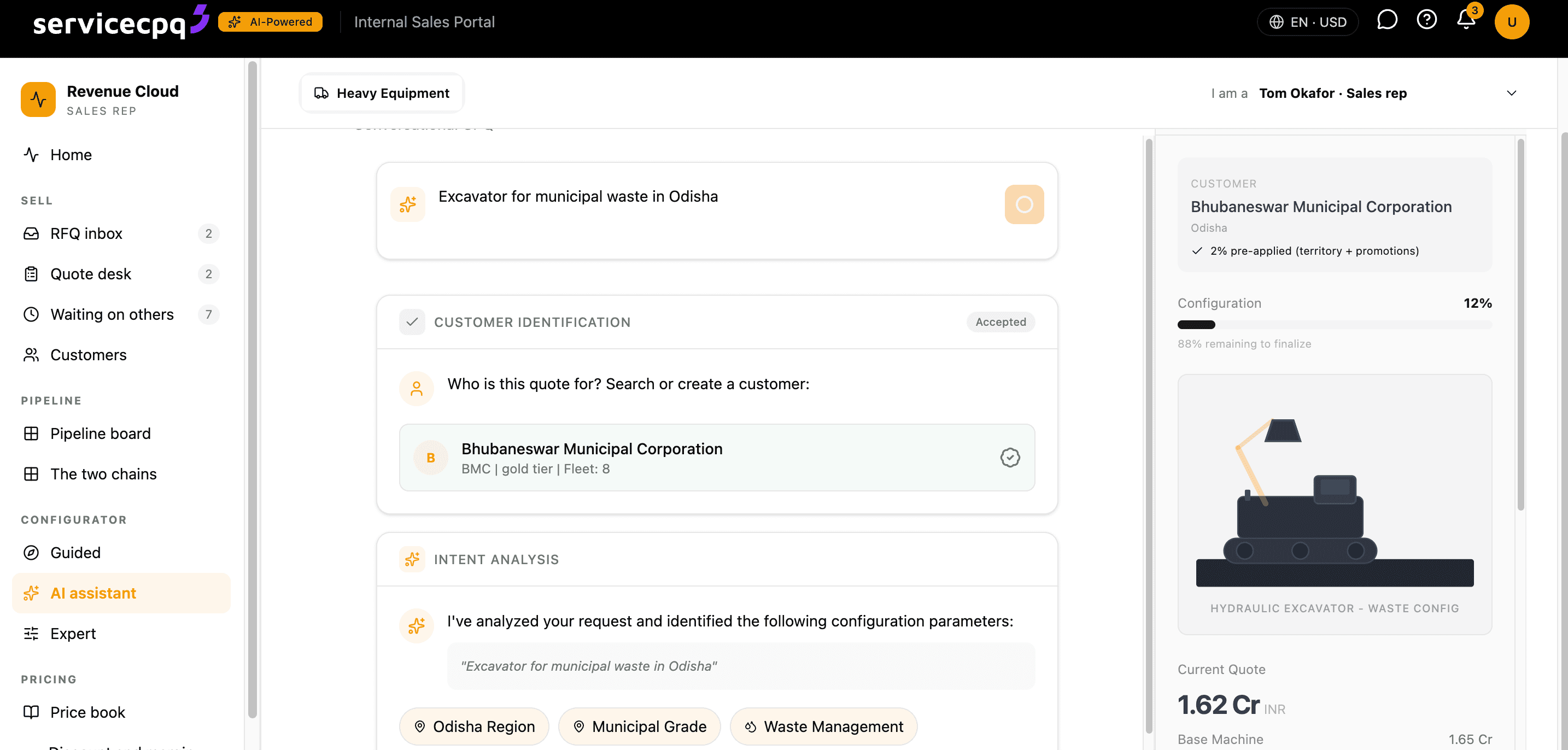
Routine builds narrowed one question at a time, with options filtered and reasons given — the default path for sellers, distributors and buyers.
State what is known; the engine reports what it concluded and why, and returns ranked, priced answers with engineering notes carried inline.
Parts quoted against the as-built machine with AI-matched supersessions — distributors and customers self-serve without calling HQ.
Extended coverage and preventive-maintenance contracts quoted and bundled at the point of machine sale.
Component-exchange and rebuild scopes quoted from asset history before failure, with true cost-to-serve across the machine's life.
Keep commercial rules close to the quote. Channel and project pricing apply automatically, while margin floors and discount guardrails stay in view.
Apply direct, distributor and volume pricing automatically, within manufacturer margin floors.
Keep each quote inside margin policy and route for approval only when needed.
Support localized pricing across every plant and channel from one catalogue.
Make the quote a connected part of engineering and operations, with product and commercial information flowing between your systems.
Configured orders flow into ERP and production planning without re-keying.
Keep configuration rules aligned with the engineering model as the product changes.
Parts, service and rebuild quoted against the as-built asset record.
Give sales engineers, distributors and the aftermarket team a clear place to configure, pull documents and generate a quote inside your rules.
Build routine machines fast and capture engineered specials in the same workflow.
Keep manuals, specification sheets and drawings alongside products and quotes.
Start from the nearest configuration you have already built and priced, instead of an empty form.
Quote parts, service and rebuild against the as-built machine record.
Margin floors and approval thresholds enforced automatically as quotes are built.
Move validated routine and configurable builds forward while the customer is engaged — and send only the genuine engineered exception to engineering.
A valid, priced build instead of an afternoon in spreadsheets.
Start from the closest build you have already engineered and close the gap.
Quote parts and a rebuild scope against the as-built machine before the lead goes cold.
Illustrative examples. Configuration scope and quote speed depend on your products, rules and integrations.
Generic CPQ handles a flat option list. High-mix industrial quoting needs real engineering rules, engineer-to-order inside the quote and aftermarket on one commercial object.
| CAPABILITY | GENERIC CPQ / ERP QUOTING | SERVICECPQ |
|---|---|---|
| Engineering rules & dependencies | Flat option list; invalid builds slip through | Consumes / requires / excludes modelled as rules |
| Engineer-to-order in the quote | Handled offline, re-keyed later | Custom lines, substitutions & notes carried inline |
| Guided and expert modes | One rigid form for every build | Guided for routine, expert for the hard ones |
| Recurring specials surfaced | Same special re-engineered every time | Repeat engineered builds counted and named |
| Aftermarket parts, service & rebuild | Managed in separate systems | One engine from first quote to rebuild |
| Time to quote | Hours to weeks per build | Minutes, with only the exception routed to engineering |
Clear answers for teams evaluating CPQ for high-mix and engineered machinery.
It is configure, price, quote software built for industrial equipment and machinery OEMs — covering high-mix, engineered-to-order machinery configuration with engineering rules modelled on a knowledge graph, guided and expert quoting across direct, distributor and self-service channels, and the aftermarket lifecycle of parts, service and rebuild on one platform.
Yes. Standard and configurable builds are validated automatically against the rules; genuinely engineered work captures custom line items, BOM substitutions and engineering notes inside the quote, with pricing applied from the configuration. Only the real exception routes to engineering, and recurring specials are surfaced so the ones that should become catalogue products get named.
Guided mode narrows routine builds one question at a time with options filtered and reasons given — the default path for sellers, distributors and self-service buyers. Expert mode lets a sales engineer state what is already known; the engine reports what it concluded and why, asks only the questions that still change the answer, and returns ranked, priced answers.
Yes. Parts, extended warranty, service contracts and rebuild are quoted against the as-built asset on the same engine as the new-machine sale — so recurring revenue from a global installed base is captured instead of chased across disconnected systems.
Discount guardrails and margin floors are applied at quote time, so each quote stays inside policy and routes for approval only when it needs to — before margin is eroded.
Configured orders flow into ERP and production planning, and configuration rules can be aligned with the engineering model in PLM — with master-data ownership set explicitly per object.
We'll walk through a guided build and an engineered special in a working session tailored to your products and rules.
Book a working session