Spec-first
Pressure class, bore and material resolved before a price
Wellhead, valve, pressure-equipment and skid configuration against real pressure-class, bore, material and API/NACE certification rules — engineer-to-order carried inside the quote, and a full aftermarket engine for spares, re-certification, service and refurbishment. One platform, one knowledge graph.
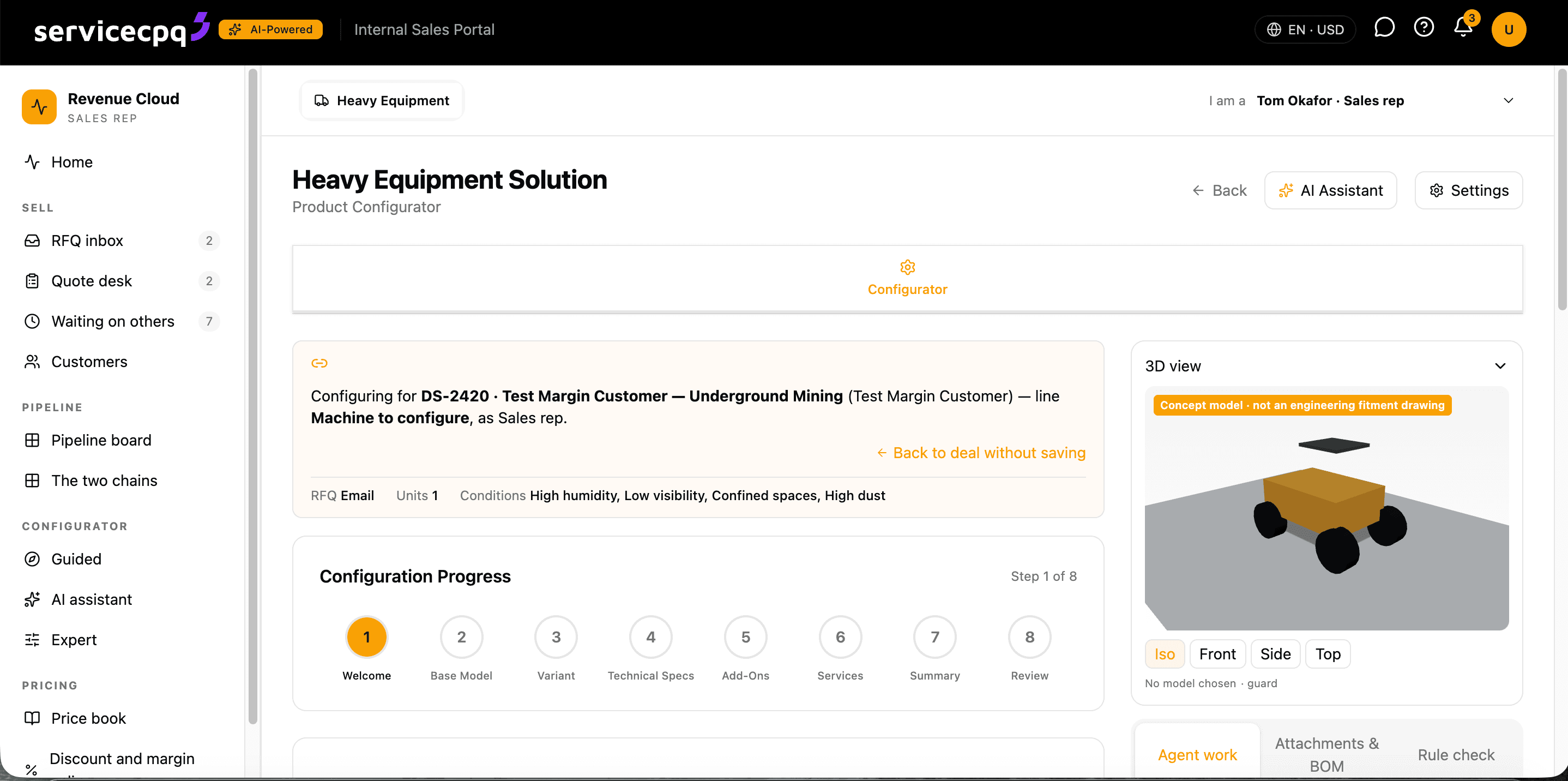
Pressure class, bore and material resolved before a price
Certification and sour-service rules enforced at quote time
Engineer-to-order scopes carried inside the quote
First quote to field service on one knowledge graph
Oil & gas equipment is specified by pressure, material and certification, sold engineered-to-order, and lives for decades in the field — where a non-conforming trim is far more than a margin problem.
A wellhead or valve is specified by pressure rating, bore, temperature class, material and certification — not picked off a catalogue. Generic CPQ prices a part number; it cannot tell whether the configuration is even valid for the service.
NACE material limits, API ratings and client specifications are not optional. Tracked in spreadsheets and an engineer's memory, the wrong trim or elastomer reaches a quote — and a field non-conformance is more than a margin problem.
Because nothing validates the request up front, standard and near-standard builds queue behind genuinely engineered ones — so quote cycles run in weeks and sales waits on the people the shop needs.
Spares, re-certification, field service and refurbishment are sold long after the equipment ships, against records that no longer match the as-built unit — missing recurring revenue.
End-user and project specifications change between enquiry and order, and a static configurator cannot keep the quote aligned with the latest controlling document.
A build close to one already engineered and priced is rebuilt from scratch because there is no way to find and reuse the earlier configuration.
Give your team one consistent workflow for every transaction — from a spec-validated new build to the re-certification and refurbishment the installed base needs.
Pressure, bore, temperature, material and certification validated against the service conditions before a price is ever built.
Custom line items, material substitutions, client-spec overrides and engineering notes carried inside the quote, with pricing from the configuration.
Agents quote within the pressure, material and territory rules you set, with margin guidance and a full audit trail.
Parts, seal kits and re-certification quoted against the as-built, serial-specific unit — what is offered matches what is in the field.
Preventive-maintenance, inspection and extended-coverage contracts quoted and bundled at the point of equipment sale.
Overhaul and refurbishment scopes quoted from the equipment's own history, with true cost-to-serve across its field life.
Keep commercial rules close to the quote. Material surcharges, certification costs and project-specific pricing apply automatically, while margin floors stay in view.
Apply material grade, surcharge and sour-service cost automatically as the configuration resolves.
Honour agreed framework rates and project pricing without re-keying, inside manufacturer margin floors.
Support localized pricing across every manufacturing and service location from one catalogue.
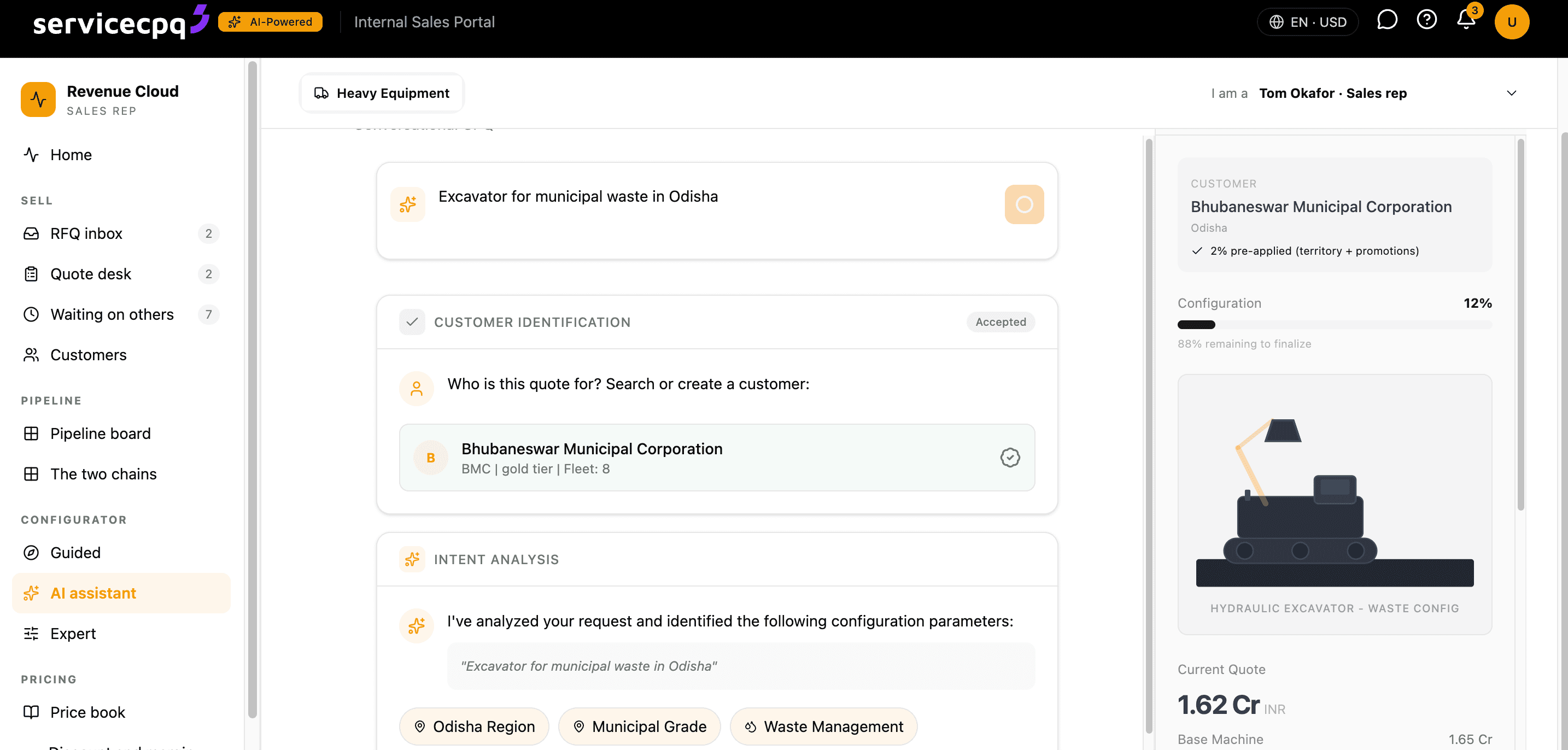
Make the quote a connected part of engineering and operations, with product and commercial information flowing between your systems.
Configured orders flow into ERP and production planning without re-keying.
Keep configuration rules aligned with the engineering model and controlling specifications.
Spares and service quoted against the serial-specific as-built asset record.
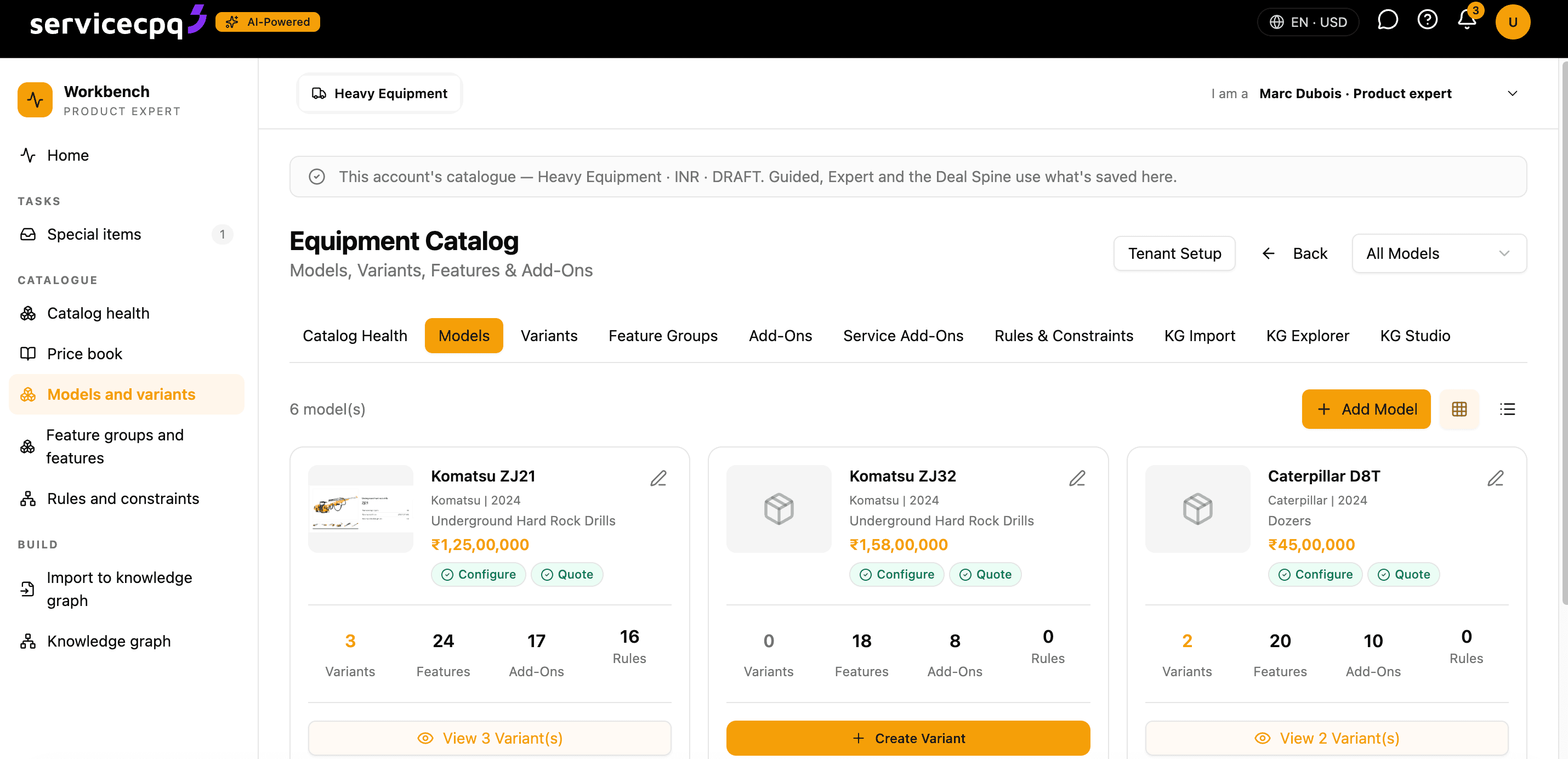
Give applications engineers and the aftermarket team a clear place to configure, pull certifications and datasheets, and generate a quote inside your rules.
Build to spec with pressure, material and certification rules applied as you go.
Keep specification sheets, material certificates and compliance documents alongside the quote.
Start from the nearest configuration you have already engineered and priced, instead of an empty form.
Quote spares, re-certification and refurbishment against the as-built unit.
Margin floors and approval thresholds enforced automatically as quotes are built.
Move spec-validated standard and near-standard builds forward while the customer is engaged — and send only the genuine engineered exception to engineering.
A valid, priced, certification-aware build instead of a week waiting on review.
Start from the closest build you have already engineered and close the gap.
Quote spares and re-certification against the as-built unit before the lead goes cold.
Illustrative examples. Configuration scope and quote speed depend on your products, rules and integrations.
Generic CPQ prices a part number. Oil & gas quoting needs real pressure, material and certification rules, engineer-to-order inside the quote, and aftermarket on one commercial object.
| CAPABILITY | GENERIC CPQ / ERP QUOTING | SERVICECPQ |
|---|---|---|
| Pressure, bore & material rules | Flat option list; validity checked by hand | Pressure class, bore & material validated at quote time |
| Certification & sour-service compliance | Tracked in spreadsheets and engineer memory | API / NACE limits enforced as rules |
| Engineer-to-order in the quote | Handled offline, re-keyed later | Custom lines, substitutions & notes carried inline |
| Aftermarket, re-cert & refurbishment | Managed in separate systems | One engine from first quote to refurbishment |
| Serial-specific as-built record | Records drift from the unit in the field | Spares & service quoted against the as-built asset |
| Time to quote | Days to weeks per enquiry | Minutes, with only the exception routed to engineering |
Clear answers for teams evaluating spec-driven CPQ for pressure equipment.
It is configure, price, quote software built for oil & gas equipment OEMs and their channel — covering wellhead, valve, pressure-equipment and skid configuration against real pressure-class, bore, material and certification rules, engineer-to-order quoting, and the aftermarket lifecycle of spares, re-certification, service and refurbishment on one knowledge graph.
Yes. Pressure rating, bore, temperature class, material limits (including NACE sour-service constraints) and API ratings are modelled as rules on the knowledge graph, so a configuration is validated against the service conditions before a price is built — invalid or non-conforming combinations never reach the customer.
Yes. Custom line items, material substitutions, client-specification overrides and engineering notes are carried inside the quote, with pricing applied from the configuration. Standard and near-standard builds are validated automatically, so only the genuine engineered exception routes to engineering.
Yes. Spares, re-certification, inspection and refurbishment are quoted against the serial-specific as-built asset on the same engine as the new-equipment sale — so recurring revenue from the installed base is captured instead of chased across separate systems.
Configuration rules and controlling specifications are maintained on the knowledge graph, so when a client or project specification changes the quote reflects the current rules rather than a stale, hand-maintained configurator.
Configured orders flow into ERP and production planning, and configuration rules can be aligned with the engineering model in PLM — with master-data ownership set explicitly per object.
We'll walk through a spec-validated, certification-aware quote flow in a working session tailored to your products and standards.
Book a working session