Every fault code is a service revenue opportunity.
Most manufacturers capture telemetry. Few convert it to revenue. ServiceCPQ connects every asset signal — fault codes, lifecycle events, anomalies — to a priced, dispatch-ready service offer. Alerts become action, not noise.
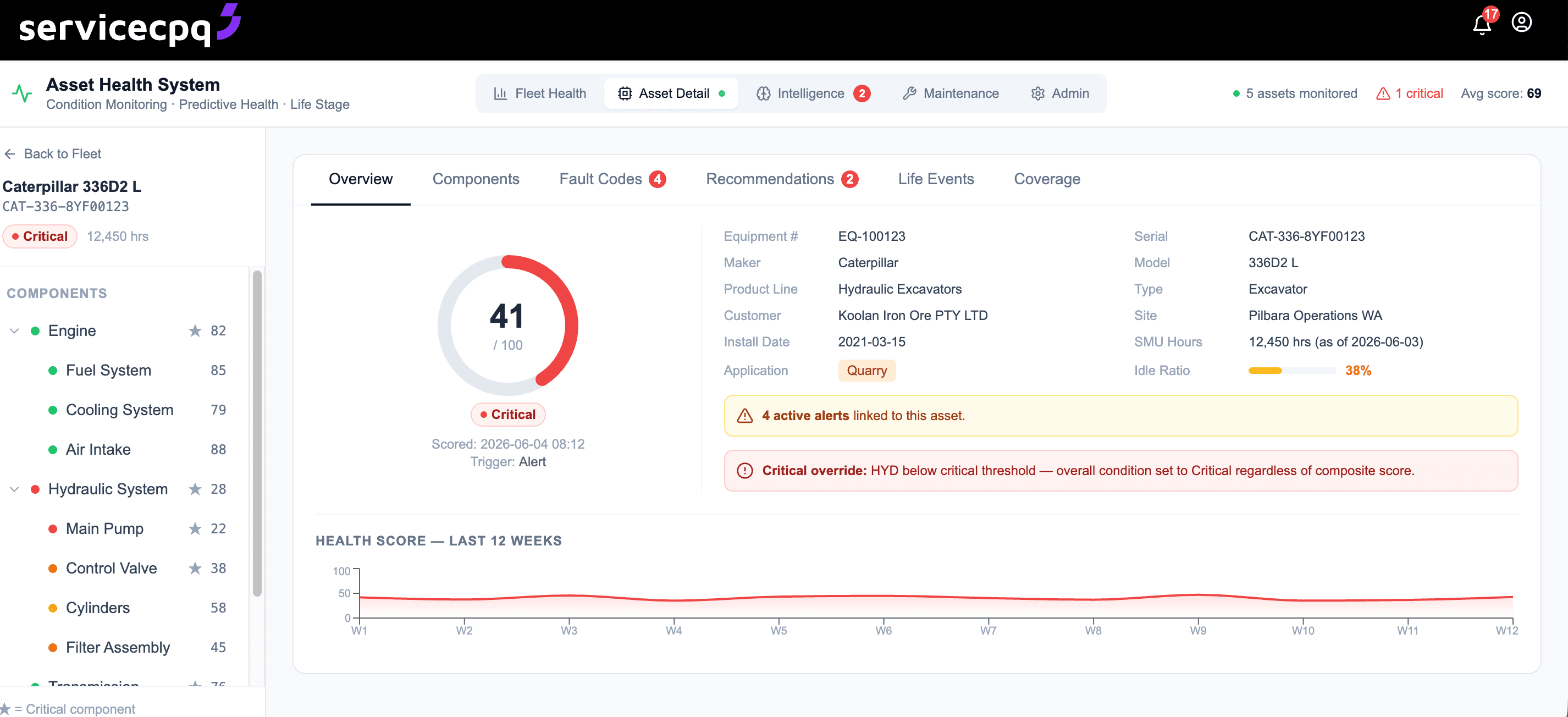
The gap between capturing alerts and monetising them.
What proactive service looks like at scale.
Based on ServiceCPQ deployments across mining, industrial and heavy equipment OEMs.
Six capabilities that convert signals into service revenue.
From alert ingestion through dispatch and billing — every step automated on the asset's knowledge graph.
Telemetry, fault codes and IoT events from any source — ranked by urgency and revenue opportunity, not just severity.
Every alert auto-creates a priced service offer with the right parts, labour and technician pre-attached. No manual translation required.
Anomaly patterns in telemetry fire proactive service actions before failure — shifting the business from reactive to revenue-generating.
PM due dates, contract renewals, warranty expirations and end-of-life milestones surfaced as timely revenue moments, not administrative tasks.
Every alert-driven job reaches the technician with full context — asset history, fault detail, fix recommendation and a quoted price — before they arrive on site.
Full visibility of alert volumes, conversion rates and revenue generated from proactive service — so the ROI of the model is visible, not theoretical.
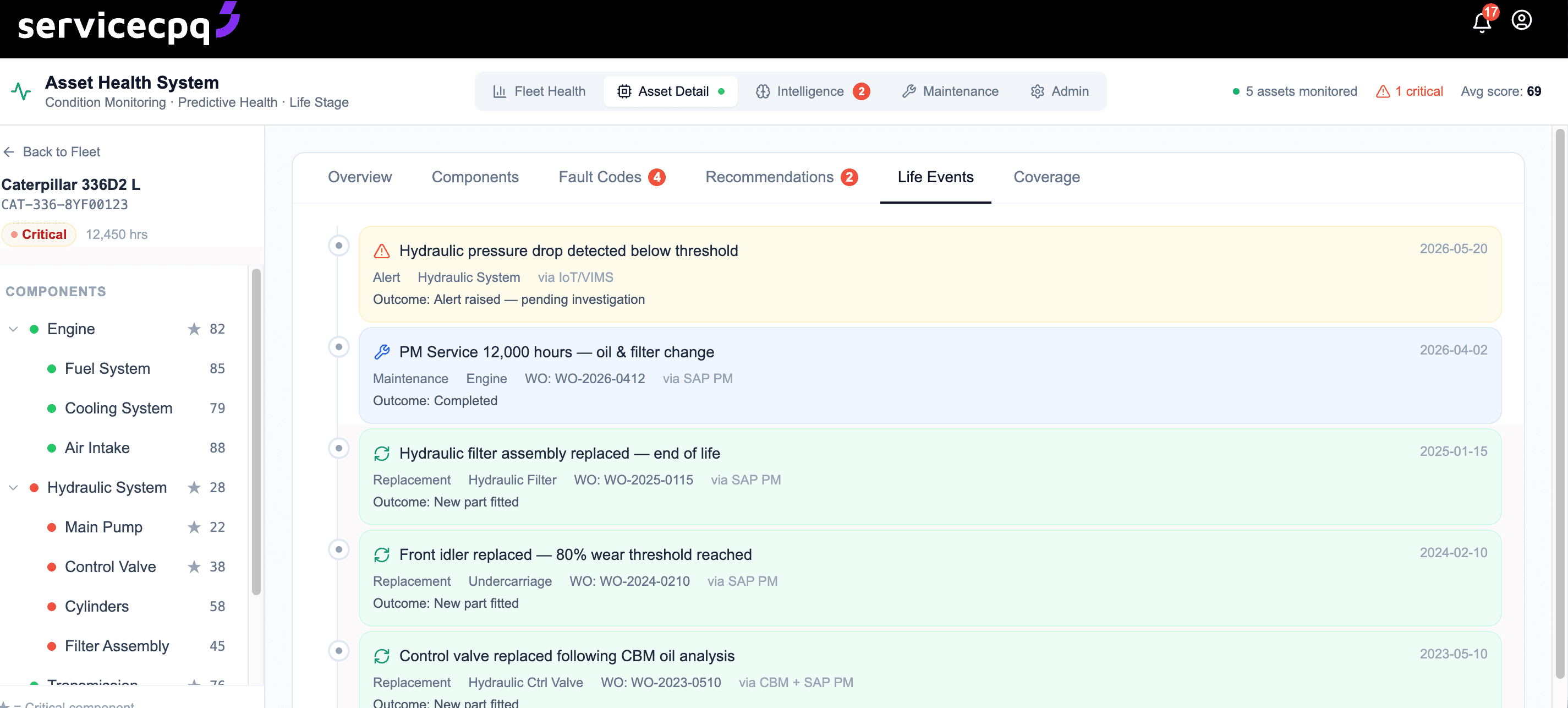
A global mining OEM running MARC contracts now converts asset-health alerts into priced service offers before the asset goes down — shifting field service from reactive to a proactive, contracted revenue stream.
Frequently asked questions
ServiceCPQ connects to any IoT or telematics source via REST API, MQTT or event streaming — OEM-native platforms, AWS IoT, Azure IoT Hub and any system that emits structured fault or telemetry data. The connector layer normalises signals into the asset knowledge graph regardless of source.
The asset's fault code is matched against your service knowledge graph — which knows the machine's config, installed parts, active contract, and service history. From there, a parts list, labour estimate and price are generated automatically and surfaced as a dispatch-ready offer. The technician gets everything before they leave the depot.
No. ServiceCPQ sits downstream of your monitoring or SCADA tool — it receives the alerts you already capture and converts them into service revenue. The monitoring tool keeps doing what it does; ServiceCPQ turns those signals into action and money.
Yes. Alert routing rules can be configured by fault code, asset type, customer tier, contract entitlement and urgency — so high-value assets under contract get immediate proactive offers, while low-priority signals are batched into scheduled maintenance.
If an alert fires on an asset that is under warranty, the system routes it to the warranty module rather than generating a commercial service offer — so the right process runs automatically without the technician or service desk needing to check coverage first.